 Magyar
Documenting Folklore
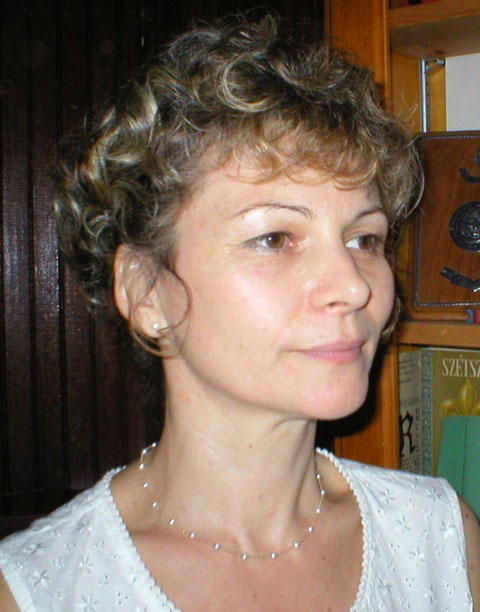
Hédi Sztanó
“When moviemaker make movies about folklore, those might be movies, but will not contain folklore in their essence. When ethnographers make a movie, it might contain folklore, but will not be a movie…”
/Jean Rouch: The Folklore Movie/
This indeed is true, except when someone has diplomas from both ethnography and filmmaking. Well, my life and movies so far are proof of the latter! Already during my years at the Ballet Institute (where I majored in folk dance), I had the possibility to travel, with my mentor and others, to areas and villages where the traditional dance-events and dance-customs, the handmade objects and tradition al attire constituted an integral part in people’s lives. A magical new world, unlike any I have seen before, opened up before me. I knew that it was not enough to wonder in awe at this world. In order to know it, I needed to learn to find my way through it. So, I decided to get a diploma in Hungarian language and ethnography at the Eötvös Lóránt University, in order to be able to
conduct research as a professional. While I visited countless villages as a trained ethnographer, I started to feel more and more that not only a few of us should know individual, outstanding musicians or dancers, or see traditions that span back centuries: we need to show these traditions, our nation’s treasures, to as many people as we can! To be able to make professional presentations, I applied and was accepted to the Theater and Film Arts Institute’s 3-year graduate program in non-fiction moviemaking. All my classmates were practicing television and movie people, who thought that I was there to maintain some kind of statistical balance. I was the outsider amongst them, the minority, who had to be admitted. I quickly proved that my experiences in ethnographic field research, my ease at making contact with people, my ability to communicate, my endurance and skill to improvise are of great advantage during the making of a film. For both ethnographic research and making ethnographic documentaries, immense amounts of empathy and humility are needed. To make people talk or sing about their innermost feelings or show the stranger the customs of the community that are considered taboo is not an easy task, especially if the person asking the questions is a young woman! Already, as an ethnographer, I learned that I must stay determined but unseen if I want to record an event. Before I do research – and later make a film – I must prepare myself seriously; I have to read all available material before I go on location. After that comes the hardest part: I have to ask and be able to guide the people in a manner that makes them feel it is important to show and tell about their culture.
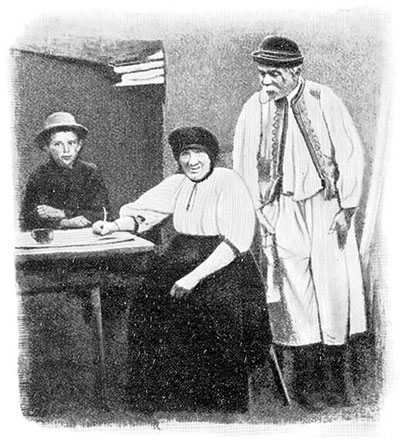
I must radiate that I am seriously interested, and approach their customs – that are often looked down upon by urban folk – with good intentions. One of the greatest successes of my professional career happened in the Transylvanian village of Méra on the eve of the “Juhbemérés” (the traditional yearly inventory of sheep and sheep-produce), when the sheep owners get together for a council, to pin down that year’s rules. Until then, no woman could attend at this big event. I was let in with my camera man. Another memorable event was when we were allowed to film – against strict regulations – the midnight mass in the village of Sugatag (Máramaros region of Transylvania). Because of my attraction and respect towards old customs I only travel and work with a small crew of maximum three people, persons who love this field as much as I do and on whom I can rely on personally and professionally. Making ethnographic documentary is a huge responsibility: one must not lie, yet has to present reality in a way that the audience can understand and fall in love with the topic. It is also a responsibility, because wherever the camera appears, it involuntarily influences the life of the very people whom the movie is about.
Translated by Áron Székely
2003
American Hungarian Museum, No. 86, 2003